Wednesday, 20 March 2013

Like a light switch...


I've always been fascinated by how the brain works and how we can try to get the best out of our brains, or more specifically: how we can get the best out of our minds.

In recent years science has revealed that our brains are much more pliable and adaptable than previously thought and the more understanding we have of the neurophysiology of the brain the more ways we can develop to manipulate that physiology or: train the brain.

Last week I started reading a book called The Willpower Instinct by Kelly McGonigal, Ph.D which is based on her very successful course at Stanford University called ‘The science of willpower’. In this book she relates the biological basis of willpower to the scientifically validated methods of improving willpower – i.e. how to train the brain to have more willpower.

Last week I also watched a science program on TV by the Horizon team called ‘The Creative brain – how insight works.’ The program followed several different groups of psychologists and neuroscientists around the world who are researching into the science of creativity. The advent of MRI scanning has revolutionised the study of the active brain enabling the understanding of human behaviour in relation to creativity to make great leaps forward. The program not only revealed what is happening in the brain when we have those ‘Eureka’ moments when our brains take a big creative leap forward but also how to manipulate those processes to make those moments more likely to happen – in other words, how to train the brain to become more creative.

Training the brain to enhance the processes that naturally occur in them is something that we already do in martial arts isn’t it? I was struck by how similar some of the strategies Dr. McGonigal advocates in her book to enhance willpower are things that martial artists interested in the more esoteric aspects of their art have been doing for centuries, they just haven’t understood the scientific basis of why they work!
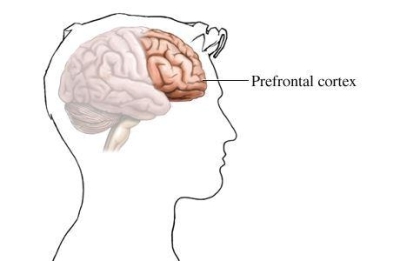
In the book Dr. McGonigal advocates breath control to activate the pre-frontal cortex (the seat of willpower) and enhance heart rate variability which shifts the body and brain from a state of stress to one of self-control. The breath should be slowed down to about 4 – 6 breaths per minute for a few minutes. This apparently is very effective if you do it just before you face a willpower challenge – i.e. when deciding whether to eat that cream cake or whether to go to the gym after work for instance.

In martial arts terms we use breath control during the execution of kata and other techniques. Is this to enable us to maintain a high level of self-control and focus during the technique?  After all, the self-control we need during martial arts training is also a pre-frontal cortex activity.

Dr. McGonigal also advocates meditation as a means of enhancing self-control and willpower. Seems like martial artists were first there with this one as well. Science has shown that five minutes of meditation based on breath focus reduces stress and teaches the mind how to handle both inner distractions (cravings, worries, desires) and outer temptations (sounds, sights and smells). It is a powerful brain training exercise. Studies have shown that people who learn to meditate for 10 minutes a day become more focused on their daily tasks throughout the day.

I’m only part way through this book at the moment but I’m hoping it’ll reveal even more useful insights into how the mind reacts to willpower challenges and tips on how to improve self-control. By the way Dr McGonigal lists a huge range of scientific references to support her claims. Why not read the book yourself?

Interestingly the science programme on the creative brain also talked about the pre-frontal cortex – except in the complete opposite terms. To be more creative you have to switch off the pre-frontal cortex as it exerts too much control over your thinking – it makes you analytical rather than creative and inhibits you from thinking outside the box.

Creative thinking, particularly insight, i.e. those moments when the answer to the problem just pops into your head from nowhere (seemingly) resides in the right side of the brain. In tests, when people were given clues to a puzzle they were far more likely to get a ‘Eureka’ moment with the answer if the clues were presented to the left visual field rather than the right (information from the left visual field is processed by the right side of the brain).

Furthermore, MRI scanning of the brain during problem solving has shown that insight is not an instantaneous thing. In the seconds before the answer pops into the conscious brain there is rapid firing of alpha waves in the visual cortex (temporarily shutting it down) followed by a burst of gamma waves in the right side of the brain near the temporal lobe – then the idea pops into consciousness and you experience your Eureka moment. In fact the subconscious brain has been collating information about the problem from several areas of the brain, this is why it shuts off the visual cortex to avoid distractions from the outside world and down regulates the pre-frontal cortex (to stop you from consciously controlling the process and thus slowing it down). Fascinating isn’t it?

Apparently if you are too intelligent and controlling with your thoughts i.e. over analytical about problems you tend to have more ordered pathways in the brain and are less able to think divergently about problems. Less intelligent people tend to have more scattered pathways in the brain and are better at divergent thinking and more likely to have moments of creative insights. Remember, sophisticated MRI scanning and imaging during psychological and problem solving tests has concluded these findings – don’t just take my word for it, watch the programme on BBC I-player if you can.

It appears that our brains work faster when we are not consciously controlling them. In martial arts we already intuitively know that don’t we? We know that in a fight we should let the training take over and just react – muscle memory will do the rest- right? If we over-analyse a situation and try and make lots of conscious decisions about which technique to choose we become too slow and hesitant and will probably lose the fight. We need to switch off the pre-frontal cortex in order to fight effectively.  

To illustrate that fact for a moment: in the creative brain programme they had a seriously good improvised jazz musician improvise a piece of music whilst his brain was scanned in an MRI scanner. Remember he was making this music up as he went along and it was good and it was fast. Many areas of his brain were lit up – except the pre-frontal cortex which he had almost completely switched off. His fingers just did the talking over those keys, no conscious brain allowed!

Where does all this leave us in martial arts? You need your pre-frontal cortex switched on to train so that you can stay focused, in control and build up that muscle memory (which resides in the brain remember!). However, to fight, you need to switch the pre-frontal cortex off and let the sub-conscious brain take over. Martial arts are as much about brain training as body training – this is why we ignore the more esoteric aspects of our art at our peril. It’s not enough to just learn techniques – we have to understand how our brains work and train them too.

We need to learn how to switch our pre-frontal cortex on and off, like a light switch…


References: The Willpower Instinct – how self-control works, why it matters, and what you can do to get more of it. Kelly McGonigal, Ph.D

Horizon: The Creative Brain – how insight works. Available on BBC i-player. 


Bookmark and Share

Creative Commons License
This work is licensed under a Creative Commons Attribution-Noncommercial-Share Alike 2.0 UK: England & Wales License.

Friday, 1 March 2013

One body, two minds.


We often talk about the practice of budo but what exactly is budo and what is its purpose? My current understanding of budo is this:

At the heart of budo is the premise that the biggest battle we face in our lives is not with the enemy outside but that which resides within ourselves – the ego. Through hard physical training we come to know our true selves and become more able to defeat the ego. The reduction or control of ego is essential to allow our true selves to be nurtured and developed. This developing of the true self allows us to reach our full potential in our daily lives: at work, home, relationships, friendships and other activities we are involved in.

Ego is an interesting concept; it has several definitions related to the human psyche and I think that only one of them is relevant to the subject of budo. Ego is defined as:  The self, especially as distinct from the world and other selves. Clearly budo is not about trying to lose one’s sense of self. Ego is also defined as: an appropriate pride in oneself; self-esteem. We can all agree that self-esteem is important to our sense of self-worth and happiness and an appropriate level of pride in oneself keeps us clean and sociable, provides a desire to keep healthy and gives us motivation to do things well. So budo is not about ridding ourselves of this type of ego either. Thus it must be about the third definition: An exaggerated sense of self-importance; conceit.

So, some ego is necessary for normal human functioning and good mental and physical health but a surfeit of ego tips over into self-importance, conceit and perhaps an unwarranted sense of entitlement – this is what the budo practitioner is trying to rid themselves of.  But why? What’s wrong with egotism? We need to answer this question because if you don’t see a problem with excess pride, vanity or an exaggerated sense of self-worth or entitlement then you’re not ready to take on the challenges of budo.

Excess ego damages both yourself and others. It damages others because ego is inherently selfish; the egotist puts his/her needs before others. The need to acquire wealth and status may be overwhelming and the egotist may become ready to lie, cheat or just display shear ruthlessness to get what they want (or think they deserve) in life. The egotist may neglect family and relationships in pursuit of personal goals leaving a trail of unhappiness behind him/her.  The egotist may also think nothing wrong with acquiring a surfeit of the world’s resources (property, money, land etc) without concern for how this may affect other people. In essence the egotist’s sense of entitlement can impact negatively on other people.

Ego is also damaging to the self because it limits the opportunity for real self-development – development of the true self. Ego lets the true self hide behind bluster and boasting; it stops you from learning new things because you already think you know them; it makes you compete with people in environments where you should be cooperating (e.g. work colleagues or even with your neighbours – got to have a better car on the drive than they do?) While your ego is busy controlling your behaviour your true self is just languishing in the background, unloved and un-nurtured.

How do we tell the difference between what is ego and what is truly us? Well, one tell-tale sign is the way we focus on tasks. Ego tends to be driven by outcomes – reaching the goal is more important than how we get there. You got the big car, big house, pots of money, pile of trophies or whatever it is you wanted and you didn’t really care what you had to do, or who you hurt to get it – that’s ego.

On the other hand the true self is driven by process – the need to do a good job regardless of reward. You do your job to the best of your ability because that is what you expect of yourself and that is what you contracted to do with your employer – seeing your company thrive or your clients happy with your service is its own reward. Working hard at your relationships – each partner giving selflessly to the other (and therefore each partner also receiving) builds a strong, happy environment in which both partners can thrive. Training hard in the dojo for the pleasure and challenge of getting better and better, revealing the courage, persistence, determination and focus needed to improve will lead to its own intrinsic rewards.

If you focus on the process the outcomes will reach themselves but more importantly your true self will have developed as you strive to learn the skills needed to do your job well, showed compassion, trust and integrity in your relationships and revealed the positive aspects of your character through hard physical training.

Does this mean that every man or woman who has a fast car, big house, well paid job or lots of trophies is an egotist? Of course not, many altruistic people who have worked hard to develop themselves and do an excellent job, showed honesty and integrity in all they do have been rewarded with good salaries that can buy some of the luxuries of life. Many of these people give back to society through philanthropic acts of generosity. For these people the process of how they lived and developed themselves was more important than achieving outcomes – the outcomes just followed.

Budo teaches you to focus on the process of training rather than the outcomes. Your ego wants the outcome (black belt, trophy, fame, recognition, money); your true-self wants simply to be the best it can in your chosen martial art and in every aspect of your life.  If positive outcomes follow then great but your true-self should not desire the outcome at any cost!

There isn’t room in your body for both the inflated ego and your true self – one of them has to go. Which will you choose? Are you ready for the budo challenge?


Bookmark and Share
Creative Commons License
This work is licensed under a Creative Commons Attribution-Noncommercial-Share Alike 2.0 UK: England & Wales License.
Monday, 18 February 2013

I'm a woman, not a small man!


Do you think that martial arts are institutionally sexist? I'm not saying that they are or that they’re not, I'm just asking the question.

I sometimes feel like a square peg in a round hole when it comes to my training and the harder I think about this the squarer becomes the peg and the rounder becomes the hole! If I don’t think about it then I fit in perfectly well in my club and don’t perceive there to be any problem at all.

Have I confused you yet? The problem is when I just concentrate on learning the art of karate (or jujitsu or kobudo as I have in the past) then it all seems very relevant to me and I enjoy learning it all. BUT when I think about my own personal self-defence needs I realise that a lot of what I learn is not terribly relevant to women, or is, at least, not presented in a way that is relevant to women.

The self-defence aspect of martial arts is not sexist but it is male-centric, i.e. it generally revolves around the needs of men and the self-defence scenarios that they may encounter. Women are being trained to fight like men. This is not surprising since martial arts were developed by men to teach men to fight other men. Yes, I know Wing Chun was allegedly developed by a woman but it still mainly teaches its practitioners to fight like men.

I suspect most instructors don’t think about it like this – they treat all their student’s the same (so in that sense it is not sexist) but they just treat everyone like a man – women are trained as if they are just small men.

Lots of people tell me that strength is not important to make a technique work and that most techniques can be adjusted slightly to help small people make them work on big people. I don’t doubt this (well sometimes I do) – I have witnessed small (but stocky) women throwing much bigger partners - in the artificial environment of the dojo. However would you ever advise a woman to move in for a hip throw in a real situation in the street? Isn't it expecting a lot for a woman to execute this successfully? Doesn't she put herself at greater risk moving into position for such a throw?

Perhaps we shouldn't ask can this technique be altered so that a woman can do it but rather should she be taught this technique at all? Is there something more appropriate to teach her?

Is there any danger in teaching women to defend themselves like men, particularly if they don’t even realise that is what they are doing? After all, women will not be attacked like men. Men attack women differently to the way they attack other men.  

Men will often find themselves attacked in a ‘monkey brain’ scenario – they get into an argument, tempers rise, they square up to each other, a cascade of hormones is released and a fight kicks off – others may join in and the ‘multiple attacker’ scenario ensues, often in public (a bar, football ground or just in the street). The attacker(s) reigns lots of punches and possibly kicks at the defender who defends his head until he can get some sort of counter-attack in. The defender may have been verbally ‘provoked’ into the altercation but he will not have been ‘groomed’. Women don’t generally face this type of scenario.

Women face a more ‘predator-prey’ situation. There may or may not be a period of ‘grooming’ before hand, e.g. ‘chatting up’ in the pub to gain trust, followed by being separated from friends to isolate them. The attack will then happen privately away from public view, usually by being grabbed first and verbally threatened with violence if they scream. A woman may be taken to another place to be raped/murdered. Or the isolation and violence may occur in her own home by her own partner. These are worse case scenarios for most women but the ones they fear most.

Of course men and women can face similar attacks too – road rage/trolley rage attackers, car park assaults/car thefts, random street attacks by unsupervised psychotic patients etc so I’m not saying there’s no overlap at all, there clearly is but there are also many differences.

Adding to all this, women are also psychologically different to men. They differ in their experiences of violence growing up (girls tend to avoid playground fights and are more cooperative and less competitive with each other) which affects their perception of an attack and their initial response to it (women can be over-trusting of strangers but experience greater levels of paralysing fear).

The physical (generally smaller, weaker stature) and mental (more trusting but more easily frightened by real violence) differences of women compared to men make some self-defence techniques less suitable for women. For example:

·         Punching. Most women have small fists compared to most men. However hard they can hit for their size they are unlikely to inflict any damage on an adrenaline fuelled attacker, they are more likely to hurt themselves. Women are better to train with open hand techniques striking soft (vital point) targets of the body and head.

·         Throwing. Like I said before – just because they can doesn't mean they should. Moving towards an attacker to position for a throw makes a woman very vulnerable to being grabbed and controlled.

·         Locks. These can be notoriously difficult to apply in a ‘fight’ situation anyway and doubly so for small female hands against the adrenaline fuelled large, strong limbs of an attacker.

·         Multiple attacker training. Apart from the very rare situation of ‘gang’ rape (more common in war zones where it is used as a weapon, but I’m not talking about war) women don’t face multiple attack scenarios so it is better to focus more on predator-prey situations.

There is a mismatch when women, training in male-centric environments, are trained to defend themselves like men when they will be attacked like women. There is a risk that they will be trained in in-effective strategies for the situations they face.

Do you agree?

Remember - I'm a woman, not a small man! (I might have this put on a t-shirt!)


Bookmark and Share
Creative Commons License
This work is licensed under a Creative Commons Attribution-Noncommercial-Share Alike 2.0 UK: England & Wales License.
Tuesday, 5 February 2013

Taiji seminar revisited...


Following my last posting on taiji, Joe Harte has kindly written to me and filled in a few gaps in my understanding. I thought I would share them with you. Below is a re-post of part of my original post with Joe's comments inserted in blue type....

Joe Harte
Last Saturday my husband and I attended a taiji seminar in Durham with experienced taiji instructor Joe Harte, whom I met and become acquainted with through my activities with the annual Marfest event last year.

We like to talk about internal and external arts and generally find our own art categorised into one of these groups without fully appreciating why or what it really means. I’m well aware that karate is categorised as an external art yet in karate we talk about (a lot) and practice (to a lesser extent) breath control, mind-body-spirit unity, altered mind states such as mushin (empty mind) and zanshin (aware mind). On the surface these seem like ‘internal’ elements yet karate remains doggedly an external art! Why? And what, therefore, is an internal art?

[ Internal / external? Originally I’m told the Chinese would refer to arts from outside china as external. But that has changed over the years and now usually is a way of referring to arts that train the mind to use intention, awareness, and energetic responses, sometimes with breath. Few however know or use the stretching muscle to generate power which has far greater potential than using contracting muscle states to develop power. See my teachers recent interview where he discusses what makes an ‘internal’ art:  http://www.taichination.com/latest.php?id=117  ]

These were questions I wanted to answer. Joe had intrigued me with something he said last year along the lines of “…Master Huang changed this form so that on the outside it looked exactly the same but on the inside felt very different….” How can something be changed to look the same on the outside but be very different in the way itfeels?

[ Master Huang 1910-1992 had studied Fujian White Crane from the age of 14 with some of the famous masters of the time. It seems the Yang Fast form died out so later in his life he introduced the Form  Er shi Ba from the white crane to the Taiji world. Slowly he changed the emphasis of this fast form over a lifetime of study to internally harmonize with the Taiji principles. So now the Quickfist that we train is externally the same, but internally changed  towards that of Taiji]

I knew the only way I was going to gain any insight into what an internal art really is was to go and experience it for myself. Having fortuitously met Joe I now had the means and opportunity to do this so I booked us onto the seminar….

Joe had warned me to dress up warm – several layers, hat, gloves, scarf etc, and wear flat shoes. “You won’t get sweaty in a taiji class,” he warned nor could he guarantee the heating would be on. Like many people I had a mental image of doing forms in a slow, relaxed way. I knew that more than that must be going on but wasn't quite sure what.
[sorry about the hall heating!]

We arrived a bit late due to the adverse weather conditions- the heavens had decided to drop another 3 inches of snow all over Britain on Friday night meaning there had been very little time for the gritters and snow ploughs to get the roads clear. The class was already doing some gentle warm up exercises so we just quietly got ready and joined in at the back.

The general etiquette and atmosphere in the class was much more relaxed and informal than in a karate class – no waiting to catch sensei’s eye to bow you onto the training area or giving you punishment press-ups because you are late! In fact, no bowing (or press-ups) at all.
[The relaxed atmosphere is more typical in Taiji classes. Also rather than belts people are recognized by the subtlety of their training, although some Taiji schools use uniforms and belts we don’t.  People are more or less free to express themselves allowing to see more of their true nature, whereas strict etiquette or outer rules would potentially block this. Seeing this helps people understand themselves in their effort to slowly change]

After the warm up exercises Joe explained that we were going to do Master Huang’s 5 loosening exercises. My interpretation was that these exercises are partly designed to help you relax your body and muscles properly and partly to start you on the path to discovering your ‘deep mind’. Joe talked us through these exercises instructing us on the external movements required and how we were supposed to be thinking and feeling on the inside, teaching us how to listen to our internal senses rather than just relying on our external senses.
We are all familiar with our external senses – sight, hearing, touch, smell and taste but not very familiar at all with our internal ones, which were defined as temperature, pressure, pain, muscle state and joint position. The idea seems to be to try and connect with the part of the unconscious mind that generally controls these senses automatically – the deep mind or Joe sometimes referred to it as the ‘body’s mind’. So as we went through the loosening exercises we were encouraged to think about the pressure experienced on our feet as our weight shifted about or about whether certain muscles were in a state of contraction or relaxation. [ the shift from external senses to internal ones is not at all easy. As the body moves the superficial mind ‘listens’ more easily to the gross outer movement, this masks the much more subtle internal sensations which are listened to by a deeper part of the mind – this takes long long training – discussed in part in my article Milestones in the Mist http://www.communigate.co.uk/ne/taijiquan/page9.phtml  ]
See my previous post for the rest of my discussion about this seminar

Bookmark and Share
Creative Commons License
This work is licensed under a Creative Commons Attribution-Noncommercial-Share Alike 2.0 UK: England & Wales License.
Tuesday, 29 January 2013

My experiences of a taiji seminar


Last Saturday my husband and I attended a taiji seminar in Durham with experienced taiji instructor Joe Harte, whom I met and become acquainted with through my activities with the annual Marfest event last year.

We like to talk about internal and external arts and generally find our own art categorised into one of these groups without fully appreciating why or what it really means. I’m well aware that karate is categorised as an external art yet in karate we talk about (a lot) and practice (to a lesser extent) breath control, mind-body-spirit unity, altered mind states such as mushin (empty mind) and zanshin (aware mind). On the surface these seem like ‘internal’ elements yet karate remains doggedly an external art! Why? And what, therefore, is an internal art?

These were questions I wanted to answer. Joe had intrigued me with something he said last year along the lines of “…Master Huang changed this form so that on the outside it looked exactly the same but on the inside felt very different….” How can something be changed to look the same on the outside but be very different in the way it feels?

I knew the only way I was going to gain any insight into what an internal art really is was to go and experience it for myself. Having fortuitously met Joe I now had the means and opportunity to do this so I booked us onto the seminar….

Joe had warned me to dress up warm – several layers, hat, gloves, scarf etc, and wear flat shoes. “You won’t get sweaty in a taiji class,” he warned nor could he guarantee the heating would be on. Like many people I had a mental image of doing forms in a slow, relaxed way. I knew that more than that must be going on but wasn't quite sure what.

We arrived a bit late due to the adverse weather conditions- the heavens had decided to drop another 3 inches of snow all over Britain on Friday night meaning there had been very little time for the gritters and snow ploughs to get the roads clear. The class was already doing some gentle warm up exercises so we just quietly got ready and joined in at the back.

The general etiquette and atmosphere in the class was much more relaxed and informal than in a karate class – no waiting to catch sensei’s eye to bow you onto the training area or giving you punishment press-ups because you are late! In fact, no bowing (or press-ups) at all.

After the warm up exercises Joe explained that we were going to do Master Huang’s 5 loosening exercises. My interpretation was that these exercises are partly designed to help you relax your body and muscles properly and partly to start you on the path to discovering your ‘deep mind’. Joe talked us through these exercises instructing us on the external movements required and how we were supposed to be thinking and feeling on the inside, teaching us how to listen to our internal senses rather than just relying on our external senses.

We are all familiar with our external senses – sight, hearing, touch, smell and taste but not very familiar at all with our internal ones, which were defined as temperature, pressure, pain, muscle state and joint position. The idea seems to be to try and connect with the part of the unconscious mind that generally controls these senses automatically – the deep mind or Joe sometimes referred to it as the ‘body’s mind’. So as we went through the loosening exercises we were encouraged to think about the pressure experienced on our feet as our weight shifted about or about whether certain muscles were in a state of contraction or relaxation.

To aid our understanding we broke off to do a partner exercise in which one partner took the weight of the others outstretched arm (stretched out horizontally to the side). You then had to gently lift your arm a fraction from the partners hold by first contracting the shoulder muscle, then the upper arm muscles to lift the elbow and finally the lower arm muscles to lift the wrist and hand. Then you had to relax the muscles in the same order – shoulder, upper arm then lower arm, resting your arm back onto the partners hold. If you had managed to completely relax the arm it should feel heavy to the person holding it and if they withdrew their hold then your arm should drop under its own weight. When I held my partner’s arm in a relaxed state it felt like a bar of lead. When he held mine and gently withdrew his hold my arm stubbornly remained in a horizontal position even though I thought I was relaxing it. I'm clearly not in communication with this internal sense!
Joe said it takes years of training to even begin to get in touch with deep mind and exert some control over it so I shouldn't be too surprised I couldn't’ do it.

Joe then introduced us to the idea of the ‘vertical circle’, which is an important concept in taiji. This idea refers to subtle lifting and sinking of the body as you cycle through a movement. We first met the concept during one of the loosening exercises and then again when we were doing one of the forms and then again during a push-hands exercise. Experiencing the vertical circle seem to involve standing in a fairly relaxed posture with one foot forward and the weight mainly on the back foot. You then imagined your mind moving upwards and forwards in an arc resulting in a gentle shifting of your weight slightly upwards and onto your front foot. You then moved your mind down below the ground bringing more weight to bear on the front leg. Your mind then comes up again (still following the arc of the circle), shifting your weight to your back foot again. It was important to ensure you were ‘opening your lower back’ to straighten the spine (like in sanchin dache), open up the hips and drop the shoulder. Your mind then returned to your head bringing you back to a more neutral stance to complete the circle. I may have got the details of that a little wrong but that was the gist of it.

This vertical circle seemed a very important technique to help train the deep mind and to generate internal power. We did another exercise with a partner in which one partner just stood sideways on to the other with their arms folded across their chest. The other partner then touched them on their arm (from the side) with both hands (as if to push) and went through the movements of the vertical circle before releasing the energy as a push. I seem to remember the mantra for this being: touch, connect, merge and follow. The ‘pushing arms’ stay relaxed and the power comes more from the body so that the ‘pushed’ person is not shoved by the use of bicep power. Using the core muscles in this way should result in a stronger push. Being a karateka I found it hard not to shove even though I know that’s not the best way to move a heavy object, even in karate. In fact, this exercise reminded me of the wave form pushing exercise we do in karate - I’m not brilliant at that either!

We spent a short time on a pushing-hands technique, designed to increase your sensitivity to your partner’s movements but much of the rest of the seminar was spent focussing on forms, a short form in the morning and a fast ‘quick fist’ form in the afternoon. Taiji forms differ immensely from karate kata in being much longer and more fluid. I found them very complicated to follow and won’t even pretend that I remember any part of them!

Taiji is not physically demanding in the way karate is but my word is it mentally demanding. This searching within yourself to find your deep mind is difficult but fascinating and ultimately deeply relaxing. I’m starting to understand what is meant by ‘internal’ arts now and it is quite different to what I expected.

I can see why karate is definitely an external art. Even the journey to self-improvement of the budoka involves only really improving the ‘superficial’ or conscious mind through the development of character and your relationship with the outside world. The internal arts follow a much more inward journey which requires you to learn to put aside your superficial mind in order to find your deep mind. It seems that the external and internal martial artists are on very different paths – probably ones that cannot merge very easily, if at all.

If you want to find out more about the style of taiji that I experienced then follow these links:

1.   An interview with Joe Harte: http://talesofbraveulysses.com/?p=126

2.   An interview with Patrick Kelly (Joe’s teacher): http://www.gekko-taichi-berlin.de/html/interview_patrick_kelly_en.html

4.   Patrick Kelly’s website:

Patrick Kelly trained directly with Master Huang. Here’s a link to an interview with Master Huang who died in 1992: http://www.patrickkellytaiji.com/TEACHERS/huangxingxian.html


Bookmark and Share
Creative Commons License
This work is licensed under a Creative Commons Attribution-Noncommercial-Share Alike 2.0 UK: England & Wales License.

LinkWithin

Related Posts with Thumbnails