Friday, 10 May 2013

A kid's sparring alternative...


Kid’s love sparring don’t they? Their faces light up when they are told to get their sparring mitts on and they run off enthusiastically to fetch them out of their bags.

Though I'm not a huge fan of sports karate for adults I do think it’s a great exercise for kids. It develops fitness, courage, reaction times, and a sense of strategy. It also toughens them up a bit and teaches them to show a bit of humility whether they win or lose.

So it is with some sadness that I can’t introduce the kids to sparring in my after-school class. Why? Because they have no sparring mitts! These are kids doing a 6 week introductory course in karate, wearing just their P.E. kits. No gi, no belt, no kit!

To give them a taste of the thrill of sparring I’ve had to be a little inventive. I take in as many belts as I can find (all my old coloured belts, my kobudo club belts and any other spares I can put my hands on) and teach the kids how to tie them on. Then I have cut up several old white belts into strips of about 10 inches long and give them one each to tuck into the front of their belts – this tab becomes the target.

We then do a bit of ‘shadow sparring’ to learn how to move around in sport karate and practice a couple of basic block/punch combinations against imaginary opponents. I then pair them up and get them to use the same technique of moving in to their partner to do a reverse punch but instead of punching (no mitts remember) they pull out their partner’s white tab.

After they’ve each had a few goes at moving in to pull out the tab of an unresisting partner they move on to doing it in a more competitive way with both partners trying to get each other’s tabs. This starts to re-create the energy and flow of a real sparring bout with the kids learning to move around each other, guard their own tab and moving in to grab their partner’s tab.

Once they’ve got the hang of it we have a mini competition which helps to teach them the basic rules and etiquette of a sparring match. I divide them into two groups and sit each group either side of the sparring area. I then call up one from each group (matched for size and age) to compete whilst everyone else watches.

I act as referee and get them to stand opposite each other, bow, get into fighting stance and then at my command (hajime) they start to ‘spar’. A point is scored when one of them pulls out the other’s tab and the match is stopped (yame), the kids are put back to their starting position and the point awarded (ippon). They then bow to each other and off they go again. We carry on like this for a set period (usually a minute) and the winner is the one with the most points. At the end the opponents are brought back to starting positions and the winner announced (kachi). All the kids get a chance to have a go at this ‘shia kumite’.

Alternatives include ‘best of three’ points to win or winner is first to score a point. There are rules about staying in the area and penalties and warnings for bad or dangerous behaviour (not that this needs to be invoked very often!).

The kids really enjoy this opportunity to have a go at ‘sparring’ in this way and seem to get a lot out of it. I have found it a useful way to simulate sport kumite when sparring mitts are not available and many of the same skills can be learnt and practiced in a safe way. I haven’t yet introduced any kicks into this style of sparring but there is no reason not to use roundhouse kicks because our real kumite sessions in the club involve only touch contact anyway and we don’t wear any protective body gear.

Hopefully if some of these kids enjoy my karate sessions enough to make them want to join the main club they will be able to hit the ground running a little when introduced to real sparring with mitts!


Bookmark and Share
Creative Commons License
This work is licensed under a Creative Commons Attribution-Noncommercial-Share Alike 2.0 UK: England & Wales License.

Sunday, 21 April 2013

Should nidan grading feel less stressful than shodan grading?


Why does training for nidan feel so different to training for shodan? I am currently training in preparation for taking my nidan grading in June. Strangely it feels a much more low-key event than my shodan grading nearly two years ago…yes, it really was nearly two years ago, how time flies!

I keep trying to put my finger on why it feels so different. By different I mean that I don’t feel the need to put together a week by week training programme for 6 months like I did for my shodan grading (remember my Countdown to Shodan blog?); neither do I feel so stressed or compelled to train every spare minute.

Don’t get me wrong, I’m training hard and taking it very seriously – I want to pass after all, but it doesn’t seem like quite the big deal that shodan grading did. In fact, I think I made some mistakes with my shodan preparations that I don’t want to repeat this time around.

I think I had placed shodan on a very high pedestal and made it into a much bigger deal than it really was, this is what made it such a stressful time in the months leading up to the grading. I also think that I over-trained a little resulting in a thigh injury and a bit of mental exhaustion.

So, for nidan preparations I have a different approach, different because I am different compared to two years ago…

I am more relaxed than for shodan grading – nidan is not on some high pedestal, it will not be earth shatteringly terrible to fail, I’ll just try again. In fact, if I don’t feel ready to take it in June I will postpone until the next round in December. Please note that relaxed doesn’t mean laid-back it just means that I’m not so frazzled by the task!

I understand my abilities/weaknesses better and have a clearer understanding of what the grading panel will expect of me. This means that I can target my training better to improve my weaknesses.

I understand a lot more than two years ago and seem to learn new things a bit more quickly – I have a greater understanding of the underlying principles that govern all techniques and so I’m more able to apply them to new situations. I think this is the result of all the teaching practice I’ve had since my shodan grading, teaching really tightens up your own understanding of what you are doing.

I trust in my regular training more to get me through. Obviously I’m doing some training at home as well as in class since we are expected at this level to work out our own ippon kumite, goshin waza and bunkai applications – sensei will help and guide as necessary but he won’t spoon feed us at this level.

For shodan grading I worked on a general fitness programme as well as practicing the karate itself. This time I am only training in karate. Why? Because I have come to believe that extreme fitness is not required for the grading. The level of fitness that I already possess gets me through some pretty demanding karate sessions without too much trouble. I think that maintaining the fitness I already have is important but trying to up it for the grading may be counter-productive and risk injury.

Nidan grading is not an extreme sport; it is merely a demanding demonstration of martial arts skills – the stuff I do week in, week out. If my current fitness level sustains me through these lessons then it should sustain me through the grading. Extreme fitness is not sustainable in the long term so it seems slightly ridiculous to need extreme fitness to pass a grading when you don’t need it for regular classes. I don’t see why a grading should require something that normal classes don’t. This is the way I’m thinking at the moment…

So far preparations are going okay, I’m not there yet but I’m feeling fairly confident that I will be by June. I attended a black belt course this weekend and have the pre-dan course in May, then it will be decided whether I am ready for this grading or not. If I get the green light to go for it then sensei will be turning up the pressure in class to get me mentally and physically ready.

If you are a nidan did you find the thought of nidan grading less stressful than shodan grading? Do you think I’m in for a shock in June?


Bookmark and Share

Creative Commons License
This work is licensed under a Creative Commons Attribution-Noncommercial-Share Alike 2.0 UK: England & Wales License.

Wednesday, 3 April 2013

Why do we.........observe reishiki?


In general terms reishiki refers to the demonstration of good etiquette or ‘correct behaviours’ in a traditional martial art dojo or club. This can be anything from knowing the correct way to enter or leave the training area, how to address your sensei, knowing where and how to stand in line, to showing good manners and respect to your fellow students. Each club will have its own variation on reishiki but at the heart of all reishiki is the concept of respect (for your club, for your sensei and for each other).

In more specific terms reishiki refers to the opening and closing ceremonies that most traditional martial art clubs observe and this is the definition of reishiki that I want to discuss in this post. The word reishiki is made up of rei (bow or respect) and shiki (ceremony) and is all about setting the right tone for the class and preparing the students mentally for the training ahead. I have been involved in seminars or classes where reishiki has consisted of nothing more than a quick standing bow to sensei at the beginning and ending of class to a rather elaborate and prolonged standing , walking, kneeling, presenting the sword, bowing, more standing, walking backwards, more kneeling, bowing, standing etc. etc .etc - like a rather complicated and precisely executed kata. I had the feeling my head would be cut off if I got it wrong!

These, of course, are two extremes of the bowing ceremony.  A ceremony that is too short does not adequately prepare the students mentally for the training to come. One that is too complicated is just unnecessary and time consuming (in my opinion).

So, what should a reishiki ceremony help the student to achieve?

When we enter a dojo or training hall we are entering a world that is different to the one outside. Our roles and responsibilities inside the dojo are often very different to the ones we have outside. You may be very senior in your career and be in charge of many staff but in the dojo you may be the new white belt. On the other hand you may be an unskilled manual worker outside but a senior black belt inside the dojo. It is important to be able to leave your external roles and responsibilities outside the dojo and assume your ‘internal’ ones. A reishiki ceremony is one way of helping you to make this separation of external and internal roles. The wearing of a gi is another.

Participating in a martial art requires us to learn about and practice violence towards other human beings. Though the mindset of the martial artist should be purely about defending oneself, the techniques often needed to do that are inherently dangerous and violent. It is imperative that training is done is a controlled and mutually respectful environment that is free from ego and machismo. Reishiki helps to create this respectful environment.

When practising a martial art we are benefiting from the skill and teachings of our martial arts forebears, people who devoted most of their time to developing and perfecting techniques and encoding them in ways that we can remember today. Reishiki is a way in which we remember and honour the founders of our system and also honour the sensei that teaches us that system today.

How does reishiki achieve these things?

A typical reishiki ceremony:

Sensei gives the following commands:

1.       Seiretsu. The students are called to line up in grade order. This is the time when you have to address your position in the dojo and let go of external roles which become unimportant in this context.

2.       Seiza.  The students sit in a formal kneeling position. In some clubs the students may be sitting opposite the shomen or shinzen (shrine). In clubs that meet in a school gym or other temporary ‘dojo’ the students may face a symbolic shomen i.e. face a direction that sensei points to. Other clubs may miss this stage out altogether and just face sensei.

3.       Mokuso. The students close their eyes and observe a few moments of meditation. The idea of this is to let the students clear their minds of distracting (outside) thoughts and prepare for the training ahead.  See ‘Why do we…….perform mokuso’

4.       Mokuso yame. The students stop meditating and open their eyes.

The senior student (or a student chosen by sensei) will then give the commands:

a.       Shomen ni rei. The students bow to the shomen in order to remember and show respect to their founder.  In clubs where there is no longer any connection or communication with their Japanese origins this step may be omitted altogether.

b.      Sensei ni rei.  The students bow to sensei to show their respect to him/her and show that they are ready to listen and learn.

c.       Otaga ni rei. The students and sensei bow to each other in a mutual display of respect and courtesy. Remember, in martial arts bowing is about showing respect not subservience.

At this point the students may say words such as onegaishimasu or osu (note that osu is a contraction of the word onegaishimasu). This basically means "please let me train with you." It's an entreaty often used in asking the other person to teach you, and that you are ready to accept the other person's teaching.

Sensei then gives the following commands:

5.       Kiritsu. The students stand up with feet together and arms by their side.

6.       Rei. The students perform a small standing bow to end the ceremony.

The whole ceremony is then repeated at the end of the lesson with the gesture Arigatou gazaimashita which means thank you.

Though each class begins and ends with reishiki it must be remembered that good manners, courtesy and respect must permeate throughout the class. This keeps the class civilised, controlled and safe at all times and keeps big egos in check.

Do you have any particular reishiki rules or behaviours to share?


Bookmark and Share

Creative Commons License
This work is licensed under a Creative Commons Attribution-Noncommercial-Share Alike 2.0 UK: England & Wales License.

Wednesday, 20 March 2013

Like a light switch...


I've always been fascinated by how the brain works and how we can try to get the best out of our brains, or more specifically: how we can get the best out of our minds.

In recent years science has revealed that our brains are much more pliable and adaptable than previously thought and the more understanding we have of the neurophysiology of the brain the more ways we can develop to manipulate that physiology or: train the brain.

Last week I started reading a book called The Willpower Instinct by Kelly McGonigal, Ph.D which is based on her very successful course at Stanford University called ‘The science of willpower’. In this book she relates the biological basis of willpower to the scientifically validated methods of improving willpower – i.e. how to train the brain to have more willpower.

Last week I also watched a science program on TV by the Horizon team called ‘The Creative brain – how insight works.’ The program followed several different groups of psychologists and neuroscientists around the world who are researching into the science of creativity. The advent of MRI scanning has revolutionised the study of the active brain enabling the understanding of human behaviour in relation to creativity to make great leaps forward. The program not only revealed what is happening in the brain when we have those ‘Eureka’ moments when our brains take a big creative leap forward but also how to manipulate those processes to make those moments more likely to happen – in other words, how to train the brain to become more creative.

Training the brain to enhance the processes that naturally occur in them is something that we already do in martial arts isn’t it? I was struck by how similar some of the strategies Dr. McGonigal advocates in her book to enhance willpower are things that martial artists interested in the more esoteric aspects of their art have been doing for centuries, they just haven’t understood the scientific basis of why they work!

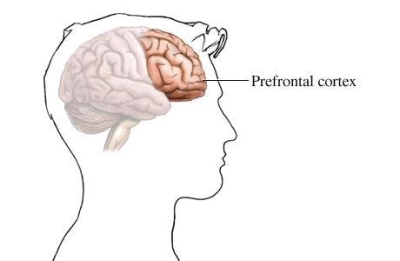
In the book Dr. McGonigal advocates breath control to activate the pre-frontal cortex (the seat of willpower) and enhance heart rate variability which shifts the body and brain from a state of stress to one of self-control. The breath should be slowed down to about 4 – 6 breaths per minute for a few minutes. This apparently is very effective if you do it just before you face a willpower challenge – i.e. when deciding whether to eat that cream cake or whether to go to the gym after work for instance.

In martial arts terms we use breath control during the execution of kata and other techniques. Is this to enable us to maintain a high level of self-control and focus during the technique?  After all, the self-control we need during martial arts training is also a pre-frontal cortex activity.

Dr. McGonigal also advocates meditation as a means of enhancing self-control and willpower. Seems like martial artists were first there with this one as well. Science has shown that five minutes of meditation based on breath focus reduces stress and teaches the mind how to handle both inner distractions (cravings, worries, desires) and outer temptations (sounds, sights and smells). It is a powerful brain training exercise. Studies have shown that people who learn to meditate for 10 minutes a day become more focused on their daily tasks throughout the day.

I’m only part way through this book at the moment but I’m hoping it’ll reveal even more useful insights into how the mind reacts to willpower challenges and tips on how to improve self-control. By the way Dr McGonigal lists a huge range of scientific references to support her claims. Why not read the book yourself?

Interestingly the science programme on the creative brain also talked about the pre-frontal cortex – except in the complete opposite terms. To be more creative you have to switch off the pre-frontal cortex as it exerts too much control over your thinking – it makes you analytical rather than creative and inhibits you from thinking outside the box.

Creative thinking, particularly insight, i.e. those moments when the answer to the problem just pops into your head from nowhere (seemingly) resides in the right side of the brain. In tests, when people were given clues to a puzzle they were far more likely to get a ‘Eureka’ moment with the answer if the clues were presented to the left visual field rather than the right (information from the left visual field is processed by the right side of the brain).

Furthermore, MRI scanning of the brain during problem solving has shown that insight is not an instantaneous thing. In the seconds before the answer pops into the conscious brain there is rapid firing of alpha waves in the visual cortex (temporarily shutting it down) followed by a burst of gamma waves in the right side of the brain near the temporal lobe – then the idea pops into consciousness and you experience your Eureka moment. In fact the subconscious brain has been collating information about the problem from several areas of the brain, this is why it shuts off the visual cortex to avoid distractions from the outside world and down regulates the pre-frontal cortex (to stop you from consciously controlling the process and thus slowing it down). Fascinating isn’t it?

Apparently if you are too intelligent and controlling with your thoughts i.e. over analytical about problems you tend to have more ordered pathways in the brain and are less able to think divergently about problems. Less intelligent people tend to have more scattered pathways in the brain and are better at divergent thinking and more likely to have moments of creative insights. Remember, sophisticated MRI scanning and imaging during psychological and problem solving tests has concluded these findings – don’t just take my word for it, watch the programme on BBC I-player if you can.

It appears that our brains work faster when we are not consciously controlling them. In martial arts we already intuitively know that don’t we? We know that in a fight we should let the training take over and just react – muscle memory will do the rest- right? If we over-analyse a situation and try and make lots of conscious decisions about which technique to choose we become too slow and hesitant and will probably lose the fight. We need to switch off the pre-frontal cortex in order to fight effectively.  

To illustrate that fact for a moment: in the creative brain programme they had a seriously good improvised jazz musician improvise a piece of music whilst his brain was scanned in an MRI scanner. Remember he was making this music up as he went along and it was good and it was fast. Many areas of his brain were lit up – except the pre-frontal cortex which he had almost completely switched off. His fingers just did the talking over those keys, no conscious brain allowed!

Where does all this leave us in martial arts? You need your pre-frontal cortex switched on to train so that you can stay focused, in control and build up that muscle memory (which resides in the brain remember!). However, to fight, you need to switch the pre-frontal cortex off and let the sub-conscious brain take over. Martial arts are as much about brain training as body training – this is why we ignore the more esoteric aspects of our art at our peril. It’s not enough to just learn techniques – we have to understand how our brains work and train them too.

We need to learn how to switch our pre-frontal cortex on and off, like a light switch…


References: The Willpower Instinct – how self-control works, why it matters, and what you can do to get more of it. Kelly McGonigal, Ph.D

Horizon: The Creative Brain – how insight works. Available on BBC i-player. 


Bookmark and Share

Creative Commons License
This work is licensed under a Creative Commons Attribution-Noncommercial-Share Alike 2.0 UK: England & Wales License.
Friday, 1 March 2013

One body, two minds.


We often talk about the practice of budo but what exactly is budo and what is its purpose? My current understanding of budo is this:

At the heart of budo is the premise that the biggest battle we face in our lives is not with the enemy outside but that which resides within ourselves – the ego. Through hard physical training we come to know our true selves and become more able to defeat the ego. The reduction or control of ego is essential to allow our true selves to be nurtured and developed. This developing of the true self allows us to reach our full potential in our daily lives: at work, home, relationships, friendships and other activities we are involved in.

Ego is an interesting concept; it has several definitions related to the human psyche and I think that only one of them is relevant to the subject of budo. Ego is defined as:  The self, especially as distinct from the world and other selves. Clearly budo is not about trying to lose one’s sense of self. Ego is also defined as: an appropriate pride in oneself; self-esteem. We can all agree that self-esteem is important to our sense of self-worth and happiness and an appropriate level of pride in oneself keeps us clean and sociable, provides a desire to keep healthy and gives us motivation to do things well. So budo is not about ridding ourselves of this type of ego either. Thus it must be about the third definition: An exaggerated sense of self-importance; conceit.

So, some ego is necessary for normal human functioning and good mental and physical health but a surfeit of ego tips over into self-importance, conceit and perhaps an unwarranted sense of entitlement – this is what the budo practitioner is trying to rid themselves of.  But why? What’s wrong with egotism? We need to answer this question because if you don’t see a problem with excess pride, vanity or an exaggerated sense of self-worth or entitlement then you’re not ready to take on the challenges of budo.

Excess ego damages both yourself and others. It damages others because ego is inherently selfish; the egotist puts his/her needs before others. The need to acquire wealth and status may be overwhelming and the egotist may become ready to lie, cheat or just display shear ruthlessness to get what they want (or think they deserve) in life. The egotist may neglect family and relationships in pursuit of personal goals leaving a trail of unhappiness behind him/her.  The egotist may also think nothing wrong with acquiring a surfeit of the world’s resources (property, money, land etc) without concern for how this may affect other people. In essence the egotist’s sense of entitlement can impact negatively on other people.

Ego is also damaging to the self because it limits the opportunity for real self-development – development of the true self. Ego lets the true self hide behind bluster and boasting; it stops you from learning new things because you already think you know them; it makes you compete with people in environments where you should be cooperating (e.g. work colleagues or even with your neighbours – got to have a better car on the drive than they do?) While your ego is busy controlling your behaviour your true self is just languishing in the background, unloved and un-nurtured.

How do we tell the difference between what is ego and what is truly us? Well, one tell-tale sign is the way we focus on tasks. Ego tends to be driven by outcomes – reaching the goal is more important than how we get there. You got the big car, big house, pots of money, pile of trophies or whatever it is you wanted and you didn’t really care what you had to do, or who you hurt to get it – that’s ego.

On the other hand the true self is driven by process – the need to do a good job regardless of reward. You do your job to the best of your ability because that is what you expect of yourself and that is what you contracted to do with your employer – seeing your company thrive or your clients happy with your service is its own reward. Working hard at your relationships – each partner giving selflessly to the other (and therefore each partner also receiving) builds a strong, happy environment in which both partners can thrive. Training hard in the dojo for the pleasure and challenge of getting better and better, revealing the courage, persistence, determination and focus needed to improve will lead to its own intrinsic rewards.

If you focus on the process the outcomes will reach themselves but more importantly your true self will have developed as you strive to learn the skills needed to do your job well, showed compassion, trust and integrity in your relationships and revealed the positive aspects of your character through hard physical training.

Does this mean that every man or woman who has a fast car, big house, well paid job or lots of trophies is an egotist? Of course not, many altruistic people who have worked hard to develop themselves and do an excellent job, showed honesty and integrity in all they do have been rewarded with good salaries that can buy some of the luxuries of life. Many of these people give back to society through philanthropic acts of generosity. For these people the process of how they lived and developed themselves was more important than achieving outcomes – the outcomes just followed.

Budo teaches you to focus on the process of training rather than the outcomes. Your ego wants the outcome (black belt, trophy, fame, recognition, money); your true-self wants simply to be the best it can in your chosen martial art and in every aspect of your life.  If positive outcomes follow then great but your true-self should not desire the outcome at any cost!

There isn’t room in your body for both the inflated ego and your true self – one of them has to go. Which will you choose? Are you ready for the budo challenge?


Bookmark and Share
Creative Commons License
This work is licensed under a Creative Commons Attribution-Noncommercial-Share Alike 2.0 UK: England & Wales License.

LinkWithin

Related Posts with Thumbnails