Showing posts with label articles. Show all posts

Friday, 4 October 2013

Martial Art or Self-Defence?


Is there a difference between learning a martial art and learning self-defence?

No! You all cry, by learning a martial art you are learning self-defence, they are (or should be) the same thing.

But are they, really?

I don’t think they are the same thing, not exactly; they are overlapping but serve slightly different purposes. Let me explain….

I think that the difference between learning a martial art and learning self-defence is a difference in purpose, focus and mindset.

Learning karate as a martial art is about preservation of the art for future generations. The purpose is one of ensuring all aspects of the system are conserved and passed on in their entirety to the student, warts and all. The focus is on the art, not the student. The mindset is to explore the secrets of the kata. Exploration of kata will reveal many techniques that have no place in the modern world of self-defence, techniques that are illegal and excessive and would have you in the dock if you were to use them to defend yourself, such as neck breaks.

One hundred and fifty years or so ago in Okinawa the death of an opponent during a confrontation did not necessarily result in imprisonment. The karate master Chotoku Kyan was said to have caused the death of a rival, Chokuho Agena, following a disagreement, by jumping onto him from a tree and breaking his neck.* Today this would be classed as murder but back then this just resulted in a feud between their families that lasted for years.

Social, legal and political systems have changed over the years but a martial art remains pretty much the same – a snapshot of an older time, preserved for historical reference. The kata are like historical documents, revealing the fighting techniques of a previous age. It takes many, many years to learn a martial art.

I am making it sound as if martial arts are irrelevant to a modern age of self-defence. Of course they are not. There is much in these ancient fighting systems that are still relevant to us – the skill is in picking out these techniques and strategies and re-packaging them for today’s students.

This brings me to self-defence. Where the purpose of learning a martial art is about preservation of the art, the purpose of learning self-defence is about preservation of the individual, i.e. teaching students how to defend themselves. The mindset is different. The instructor’s role is now about selecting appropriate techniques from the repository of ancient ones that are suitable for the type of students he/she is teaching. The focus is on the student, not the art.

This is the basis of good Reality Based Self-Defence systems (RBSD) and short self-defence courses aimed at particular groups of people such as women or University students. With RBSD the instructor will have developed his system by selecting a subset of techniques probably from a range of different martial arts and re-packaging them. He will have selected techniques based on what he thinks works best from his own experience or the experience of others and with a knowledge of how violence plays out in the real world and the risks his client group face. I doubt the students would be taught how to snap someone’s neck. The result should be that the students learn to defend themselves adequately in a relatively short period of time.

However, these RBSD systems have their limitations. They will contain instructor bias – the instructor will have chosen only those techniques which he feels are appropriate and will ignore those he doesn’t like. We all have different preferences and thus each RBSD system will be a slightly different microcosm of martial arts based self-defence centred on the instructor’s world view. Techniques that may suit some student’s better will have been lost or ignored and some student’s may find that they trail from one school to another trying to find something suitable.

Going back to martial arts systems, the problem for the student looking to learn self-defence is the opposite. They are being taught everything - relevant and irrelevant for a modern world, often spending lots of time analysing kata moves that reveal only past fighting glories and could not be used today. Amongst this are the highly useful and relevant techniques. Students are often left to pick their own way through this plethora of kata moves, identifying what is useful and legal and what should be consigned to history.

So, is it possible to become proficient at personal self-defence when you are in the environment of learning a martial art?

Well, yes but it relies on two things: a willingness of the student to study and learn about the nature of violence, the law as it relates to self-defence and to think intelligently about the aspects of the art that are relevant to them personally for their own self-protection. Secondly, an instructor who is clear in his/her own mind when he/she is teaching the ancient art (focus on art) and when he/she is teaching relevant self-defence (focus on student). This may prove a longer and more tortuous way of learning self-defence but the student may learn many other useful things along the way which relate to personal development of a more ethereal nature (mind/body unity, character development, a sense of spirituality and controlling one’s own mind and body better). These are things that won’t be learnt in the more pragmatic environment of a RBSD system.

I think it is important that we continue to have clubs that focus on teaching martial arts as art, to preserve the ancient fighting systems in their entirety and to further the historical research into the meaning of the kata. This is as much an intellectual pursuit as a practical one and suits many people.

However, some people have a real need to learn self-defence, either because of personal risky lifestyles or because they work in an environment where they may need to confront an aggressor such as in the police force, prison services or the military. These people may need more targeted training than a martial art can offer and are probably better off accessing a RBSD club or a targeted self-defence course.


These are my personal views; I think that martial art and self-defence are not entirely interchangeable. What do you think and why? 

* ref: Okinawa No Bushi No Te by Ronald L. Lindsey. Page 79.

Bookmark and Share
Creative Commons License
This work is licensed under a Creative Commons Attribution-Noncommercial-Share Alike 2.0 UK: England & Wales License.

Friday, 28 June 2013

Karate punching is like swimming...


Image from:
https://www.boundless.com/
physics/the-laws-of-motion/
newton-s-laws/
the-third-law-symmetry-in-forces/
How many times has your sensei told you that the power of your punch should originate from the ground? That you draw power from the ground and then transmit it up your legs, through the hips and torso and down your arm. You believe him/her because you respect them, they have years more experience than you and they can punch harder than you (and you should believe them because it’s basically true) but you can’t quite get your head around why it should be true.

Drawing power from the ground gives karate a mystical, magical quality as if Mother Nature herself is giving you some ‘power assist’. If, like me, you tend to prefer more rational explanations then it’s easy to think that drawing energy from the ground sounds like twaddle.  But it isn't twaddle; it can be explained by the laws of physics.

I have recently been privileged to have a sneak preview of John Cole’s excellent book chapter on forces called ‘Push and pull explains all techniques’. I don’t want to pre-empt anything John has to say on this topic before his book is published but suffice to say he mentions Newton’s third law of motion which states: Every action has an equal and opposite reaction.  If we apply this law to people then basically, when you apply a force to an object it responds by applying and equal amount of force back to you. You transmit some of your energy into the object (e.g. by pushing it), the object transmits an equal amount of energy back into you.  What happens to that energy once it comes back to you depends on several factors: if you happen to be the smaller, lighter object then you will probably move; if you are not able to move freely, you’re restrained in some way, or the returned energy is being transmitted to a small surface area (e.g. you pricked your finger on a needle) then the energy may cause injury to you instead or alternatively you may be able to utilise the returned energy in some other way.

In my title I said that karate punching is like swimming. More specifically ‘drawing energy from the ground’ is analogous to pushing yourself away from the side of the swimming pool to gain momentum. If you can swim then you will know from experience that it is quicker to get some speed up if you push yourself away from the side of the pool with your feet than to just start swimming from a standing start. Why is this? Newton’s third law of motion explains it…..you push against the wall of the pool, transmitting energy into it and the pool wall ‘pushes’ an equal amount of energy back to you in the opposite direction. Since you are in a horizontal position in the pool (and you are weightless in water) the effect of receiving the energy back is to propel you in a forward direction.

A karate punch works on the same principle. If you take a firm stance and push down into the ground with your feet, transmitting energy into it, the ground responds by pushing an equal amount of energy back into you. Since you are in a vertical position the energy is transmitted upwards (opposite to the direction you pushed in). Though you are lighter than the ground below you the effects of gravity pressing down on you make it unlikely that you will respond by launching upwards (unless the ground below you was a trampoline!) The received energy doesn't normally injure you either because it is spread over the relatively large surface area of your feet (It might hurt more if you just pushed the ground with the top of your big toe) Instead, you are in a position to utilise that returning energy to enhance your punch.  How you achieve that is worthy of a blog or two of its own; suffice to say that with the correct sequence of muscular contraction and relaxation, starting with the lower legs, upper legs, hips, torso, shoulders and finally the arm and fist the energy can be transferred from muscle group to muscle group until it finally leaves your fist!

This won’t happen by chance though – only through training and practice can you learn to utilise the energy that you received via Newton’s third law of motion by pushing into the ground first. Without training this energy will just dissipate from your feet or half way up your legs and be wasted.  The harder you push into the ground the more energy you’ll get back (the harder you throw a ball at a wall the further and faster it comes back to you; the harder you push off the pool side the further and faster you’ll glide through the water).  Punching is only different because we are complex beings and we have to train to learn how to utilise that energy effectively.

The point of this blog post was not to explain the whole physics of punching but to give the scientific explanation (in layman’s terms) of why sensei is right when he says you must draw your punching power from the ground.  Do I make sense?


Bookmark and Share
Creative Commons License
This work is licensed under a Creative Commons Attribution-Noncommercial-Share Alike 2.0 UK: England & Wales License.

Wednesday, 3 April 2013

Why do we.........observe reishiki?


In general terms reishiki refers to the demonstration of good etiquette or ‘correct behaviours’ in a traditional martial art dojo or club. This can be anything from knowing the correct way to enter or leave the training area, how to address your sensei, knowing where and how to stand in line, to showing good manners and respect to your fellow students. Each club will have its own variation on reishiki but at the heart of all reishiki is the concept of respect (for your club, for your sensei and for each other).

In more specific terms reishiki refers to the opening and closing ceremonies that most traditional martial art clubs observe and this is the definition of reishiki that I want to discuss in this post. The word reishiki is made up of rei (bow or respect) and shiki (ceremony) and is all about setting the right tone for the class and preparing the students mentally for the training ahead. I have been involved in seminars or classes where reishiki has consisted of nothing more than a quick standing bow to sensei at the beginning and ending of class to a rather elaborate and prolonged standing , walking, kneeling, presenting the sword, bowing, more standing, walking backwards, more kneeling, bowing, standing etc. etc .etc - like a rather complicated and precisely executed kata. I had the feeling my head would be cut off if I got it wrong!

These, of course, are two extremes of the bowing ceremony.  A ceremony that is too short does not adequately prepare the students mentally for the training to come. One that is too complicated is just unnecessary and time consuming (in my opinion).

So, what should a reishiki ceremony help the student to achieve?

When we enter a dojo or training hall we are entering a world that is different to the one outside. Our roles and responsibilities inside the dojo are often very different to the ones we have outside. You may be very senior in your career and be in charge of many staff but in the dojo you may be the new white belt. On the other hand you may be an unskilled manual worker outside but a senior black belt inside the dojo. It is important to be able to leave your external roles and responsibilities outside the dojo and assume your ‘internal’ ones. A reishiki ceremony is one way of helping you to make this separation of external and internal roles. The wearing of a gi is another.

Participating in a martial art requires us to learn about and practice violence towards other human beings. Though the mindset of the martial artist should be purely about defending oneself, the techniques often needed to do that are inherently dangerous and violent. It is imperative that training is done is a controlled and mutually respectful environment that is free from ego and machismo. Reishiki helps to create this respectful environment.

When practising a martial art we are benefiting from the skill and teachings of our martial arts forebears, people who devoted most of their time to developing and perfecting techniques and encoding them in ways that we can remember today. Reishiki is a way in which we remember and honour the founders of our system and also honour the sensei that teaches us that system today.

How does reishiki achieve these things?

A typical reishiki ceremony:

Sensei gives the following commands:

1.       Seiretsu. The students are called to line up in grade order. This is the time when you have to address your position in the dojo and let go of external roles which become unimportant in this context.

2.       Seiza.  The students sit in a formal kneeling position. In some clubs the students may be sitting opposite the shomen or shinzen (shrine). In clubs that meet in a school gym or other temporary ‘dojo’ the students may face a symbolic shomen i.e. face a direction that sensei points to. Other clubs may miss this stage out altogether and just face sensei.

3.       Mokuso. The students close their eyes and observe a few moments of meditation. The idea of this is to let the students clear their minds of distracting (outside) thoughts and prepare for the training ahead.  See ‘Why do we…….perform mokuso’

4.       Mokuso yame. The students stop meditating and open their eyes.

The senior student (or a student chosen by sensei) will then give the commands:

a.       Shomen ni rei. The students bow to the shomen in order to remember and show respect to their founder.  In clubs where there is no longer any connection or communication with their Japanese origins this step may be omitted altogether.

b.      Sensei ni rei.  The students bow to sensei to show their respect to him/her and show that they are ready to listen and learn.

c.       Otaga ni rei. The students and sensei bow to each other in a mutual display of respect and courtesy. Remember, in martial arts bowing is about showing respect not subservience.

At this point the students may say words such as onegaishimasu or osu (note that osu is a contraction of the word onegaishimasu). This basically means "please let me train with you." It's an entreaty often used in asking the other person to teach you, and that you are ready to accept the other person's teaching.

Sensei then gives the following commands:

5.       Kiritsu. The students stand up with feet together and arms by their side.

6.       Rei. The students perform a small standing bow to end the ceremony.

The whole ceremony is then repeated at the end of the lesson with the gesture Arigatou gazaimashita which means thank you.

Though each class begins and ends with reishiki it must be remembered that good manners, courtesy and respect must permeate throughout the class. This keeps the class civilised, controlled and safe at all times and keeps big egos in check.

Do you have any particular reishiki rules or behaviours to share?


Bookmark and Share

Creative Commons License
This work is licensed under a Creative Commons Attribution-Noncommercial-Share Alike 2.0 UK: England & Wales License.

Wednesday, 20 March 2013

Like a light switch...


I've always been fascinated by how the brain works and how we can try to get the best out of our brains, or more specifically: how we can get the best out of our minds.

In recent years science has revealed that our brains are much more pliable and adaptable than previously thought and the more understanding we have of the neurophysiology of the brain the more ways we can develop to manipulate that physiology or: train the brain.

Last week I started reading a book called The Willpower Instinct by Kelly McGonigal, Ph.D which is based on her very successful course at Stanford University called ‘The science of willpower’. In this book she relates the biological basis of willpower to the scientifically validated methods of improving willpower – i.e. how to train the brain to have more willpower.

Last week I also watched a science program on TV by the Horizon team called ‘The Creative brain – how insight works.’ The program followed several different groups of psychologists and neuroscientists around the world who are researching into the science of creativity. The advent of MRI scanning has revolutionised the study of the active brain enabling the understanding of human behaviour in relation to creativity to make great leaps forward. The program not only revealed what is happening in the brain when we have those ‘Eureka’ moments when our brains take a big creative leap forward but also how to manipulate those processes to make those moments more likely to happen – in other words, how to train the brain to become more creative.

Training the brain to enhance the processes that naturally occur in them is something that we already do in martial arts isn’t it? I was struck by how similar some of the strategies Dr. McGonigal advocates in her book to enhance willpower are things that martial artists interested in the more esoteric aspects of their art have been doing for centuries, they just haven’t understood the scientific basis of why they work!

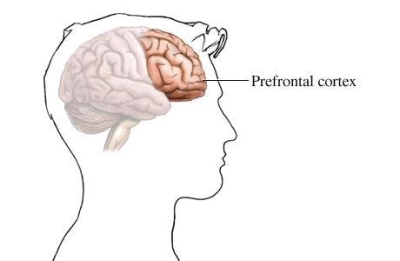
In the book Dr. McGonigal advocates breath control to activate the pre-frontal cortex (the seat of willpower) and enhance heart rate variability which shifts the body and brain from a state of stress to one of self-control. The breath should be slowed down to about 4 – 6 breaths per minute for a few minutes. This apparently is very effective if you do it just before you face a willpower challenge – i.e. when deciding whether to eat that cream cake or whether to go to the gym after work for instance.

In martial arts terms we use breath control during the execution of kata and other techniques. Is this to enable us to maintain a high level of self-control and focus during the technique?  After all, the self-control we need during martial arts training is also a pre-frontal cortex activity.

Dr. McGonigal also advocates meditation as a means of enhancing self-control and willpower. Seems like martial artists were first there with this one as well. Science has shown that five minutes of meditation based on breath focus reduces stress and teaches the mind how to handle both inner distractions (cravings, worries, desires) and outer temptations (sounds, sights and smells). It is a powerful brain training exercise. Studies have shown that people who learn to meditate for 10 minutes a day become more focused on their daily tasks throughout the day.

I’m only part way through this book at the moment but I’m hoping it’ll reveal even more useful insights into how the mind reacts to willpower challenges and tips on how to improve self-control. By the way Dr McGonigal lists a huge range of scientific references to support her claims. Why not read the book yourself?

Interestingly the science programme on the creative brain also talked about the pre-frontal cortex – except in the complete opposite terms. To be more creative you have to switch off the pre-frontal cortex as it exerts too much control over your thinking – it makes you analytical rather than creative and inhibits you from thinking outside the box.

Creative thinking, particularly insight, i.e. those moments when the answer to the problem just pops into your head from nowhere (seemingly) resides in the right side of the brain. In tests, when people were given clues to a puzzle they were far more likely to get a ‘Eureka’ moment with the answer if the clues were presented to the left visual field rather than the right (information from the left visual field is processed by the right side of the brain).

Furthermore, MRI scanning of the brain during problem solving has shown that insight is not an instantaneous thing. In the seconds before the answer pops into the conscious brain there is rapid firing of alpha waves in the visual cortex (temporarily shutting it down) followed by a burst of gamma waves in the right side of the brain near the temporal lobe – then the idea pops into consciousness and you experience your Eureka moment. In fact the subconscious brain has been collating information about the problem from several areas of the brain, this is why it shuts off the visual cortex to avoid distractions from the outside world and down regulates the pre-frontal cortex (to stop you from consciously controlling the process and thus slowing it down). Fascinating isn’t it?

Apparently if you are too intelligent and controlling with your thoughts i.e. over analytical about problems you tend to have more ordered pathways in the brain and are less able to think divergently about problems. Less intelligent people tend to have more scattered pathways in the brain and are better at divergent thinking and more likely to have moments of creative insights. Remember, sophisticated MRI scanning and imaging during psychological and problem solving tests has concluded these findings – don’t just take my word for it, watch the programme on BBC I-player if you can.

It appears that our brains work faster when we are not consciously controlling them. In martial arts we already intuitively know that don’t we? We know that in a fight we should let the training take over and just react – muscle memory will do the rest- right? If we over-analyse a situation and try and make lots of conscious decisions about which technique to choose we become too slow and hesitant and will probably lose the fight. We need to switch off the pre-frontal cortex in order to fight effectively.  

To illustrate that fact for a moment: in the creative brain programme they had a seriously good improvised jazz musician improvise a piece of music whilst his brain was scanned in an MRI scanner. Remember he was making this music up as he went along and it was good and it was fast. Many areas of his brain were lit up – except the pre-frontal cortex which he had almost completely switched off. His fingers just did the talking over those keys, no conscious brain allowed!

Where does all this leave us in martial arts? You need your pre-frontal cortex switched on to train so that you can stay focused, in control and build up that muscle memory (which resides in the brain remember!). However, to fight, you need to switch the pre-frontal cortex off and let the sub-conscious brain take over. Martial arts are as much about brain training as body training – this is why we ignore the more esoteric aspects of our art at our peril. It’s not enough to just learn techniques – we have to understand how our brains work and train them too.

We need to learn how to switch our pre-frontal cortex on and off, like a light switch…


References: The Willpower Instinct – how self-control works, why it matters, and what you can do to get more of it. Kelly McGonigal, Ph.D

Horizon: The Creative Brain – how insight works. Available on BBC i-player. 


Bookmark and Share

Creative Commons License
This work is licensed under a Creative Commons Attribution-Noncommercial-Share Alike 2.0 UK: England & Wales License.
Friday, 1 March 2013

One body, two minds.


We often talk about the practice of budo but what exactly is budo and what is its purpose? My current understanding of budo is this:

At the heart of budo is the premise that the biggest battle we face in our lives is not with the enemy outside but that which resides within ourselves – the ego. Through hard physical training we come to know our true selves and become more able to defeat the ego. The reduction or control of ego is essential to allow our true selves to be nurtured and developed. This developing of the true self allows us to reach our full potential in our daily lives: at work, home, relationships, friendships and other activities we are involved in.

Ego is an interesting concept; it has several definitions related to the human psyche and I think that only one of them is relevant to the subject of budo. Ego is defined as:  The self, especially as distinct from the world and other selves. Clearly budo is not about trying to lose one’s sense of self. Ego is also defined as: an appropriate pride in oneself; self-esteem. We can all agree that self-esteem is important to our sense of self-worth and happiness and an appropriate level of pride in oneself keeps us clean and sociable, provides a desire to keep healthy and gives us motivation to do things well. So budo is not about ridding ourselves of this type of ego either. Thus it must be about the third definition: An exaggerated sense of self-importance; conceit.

So, some ego is necessary for normal human functioning and good mental and physical health but a surfeit of ego tips over into self-importance, conceit and perhaps an unwarranted sense of entitlement – this is what the budo practitioner is trying to rid themselves of.  But why? What’s wrong with egotism? We need to answer this question because if you don’t see a problem with excess pride, vanity or an exaggerated sense of self-worth or entitlement then you’re not ready to take on the challenges of budo.

Excess ego damages both yourself and others. It damages others because ego is inherently selfish; the egotist puts his/her needs before others. The need to acquire wealth and status may be overwhelming and the egotist may become ready to lie, cheat or just display shear ruthlessness to get what they want (or think they deserve) in life. The egotist may neglect family and relationships in pursuit of personal goals leaving a trail of unhappiness behind him/her.  The egotist may also think nothing wrong with acquiring a surfeit of the world’s resources (property, money, land etc) without concern for how this may affect other people. In essence the egotist’s sense of entitlement can impact negatively on other people.

Ego is also damaging to the self because it limits the opportunity for real self-development – development of the true self. Ego lets the true self hide behind bluster and boasting; it stops you from learning new things because you already think you know them; it makes you compete with people in environments where you should be cooperating (e.g. work colleagues or even with your neighbours – got to have a better car on the drive than they do?) While your ego is busy controlling your behaviour your true self is just languishing in the background, unloved and un-nurtured.

How do we tell the difference between what is ego and what is truly us? Well, one tell-tale sign is the way we focus on tasks. Ego tends to be driven by outcomes – reaching the goal is more important than how we get there. You got the big car, big house, pots of money, pile of trophies or whatever it is you wanted and you didn’t really care what you had to do, or who you hurt to get it – that’s ego.

On the other hand the true self is driven by process – the need to do a good job regardless of reward. You do your job to the best of your ability because that is what you expect of yourself and that is what you contracted to do with your employer – seeing your company thrive or your clients happy with your service is its own reward. Working hard at your relationships – each partner giving selflessly to the other (and therefore each partner also receiving) builds a strong, happy environment in which both partners can thrive. Training hard in the dojo for the pleasure and challenge of getting better and better, revealing the courage, persistence, determination and focus needed to improve will lead to its own intrinsic rewards.

If you focus on the process the outcomes will reach themselves but more importantly your true self will have developed as you strive to learn the skills needed to do your job well, showed compassion, trust and integrity in your relationships and revealed the positive aspects of your character through hard physical training.

Does this mean that every man or woman who has a fast car, big house, well paid job or lots of trophies is an egotist? Of course not, many altruistic people who have worked hard to develop themselves and do an excellent job, showed honesty and integrity in all they do have been rewarded with good salaries that can buy some of the luxuries of life. Many of these people give back to society through philanthropic acts of generosity. For these people the process of how they lived and developed themselves was more important than achieving outcomes – the outcomes just followed.

Budo teaches you to focus on the process of training rather than the outcomes. Your ego wants the outcome (black belt, trophy, fame, recognition, money); your true-self wants simply to be the best it can in your chosen martial art and in every aspect of your life.  If positive outcomes follow then great but your true-self should not desire the outcome at any cost!

There isn’t room in your body for both the inflated ego and your true self – one of them has to go. Which will you choose? Are you ready for the budo challenge?


Bookmark and Share
Creative Commons License
This work is licensed under a Creative Commons Attribution-Noncommercial-Share Alike 2.0 UK: England & Wales License.

Monday, 18 February 2013

I'm a woman, not a small man!


Do you think that martial arts are institutionally sexist? I'm not saying that they are or that they’re not, I'm just asking the question.

I sometimes feel like a square peg in a round hole when it comes to my training and the harder I think about this the squarer becomes the peg and the rounder becomes the hole! If I don’t think about it then I fit in perfectly well in my club and don’t perceive there to be any problem at all.

Have I confused you yet? The problem is when I just concentrate on learning the art of karate (or jujitsu or kobudo as I have in the past) then it all seems very relevant to me and I enjoy learning it all. BUT when I think about my own personal self-defence needs I realise that a lot of what I learn is not terribly relevant to women, or is, at least, not presented in a way that is relevant to women.

The self-defence aspect of martial arts is not sexist but it is male-centric, i.e. it generally revolves around the needs of men and the self-defence scenarios that they may encounter. Women are being trained to fight like men. This is not surprising since martial arts were developed by men to teach men to fight other men. Yes, I know Wing Chun was allegedly developed by a woman but it still mainly teaches its practitioners to fight like men.

I suspect most instructors don’t think about it like this – they treat all their student’s the same (so in that sense it is not sexist) but they just treat everyone like a man – women are trained as if they are just small men.

Lots of people tell me that strength is not important to make a technique work and that most techniques can be adjusted slightly to help small people make them work on big people. I don’t doubt this (well sometimes I do) – I have witnessed small (but stocky) women throwing much bigger partners - in the artificial environment of the dojo. However would you ever advise a woman to move in for a hip throw in a real situation in the street? Isn't it expecting a lot for a woman to execute this successfully? Doesn't she put herself at greater risk moving into position for such a throw?

Perhaps we shouldn't ask can this technique be altered so that a woman can do it but rather should she be taught this technique at all? Is there something more appropriate to teach her?

Is there any danger in teaching women to defend themselves like men, particularly if they don’t even realise that is what they are doing? After all, women will not be attacked like men. Men attack women differently to the way they attack other men.  

Men will often find themselves attacked in a ‘monkey brain’ scenario – they get into an argument, tempers rise, they square up to each other, a cascade of hormones is released and a fight kicks off – others may join in and the ‘multiple attacker’ scenario ensues, often in public (a bar, football ground or just in the street). The attacker(s) reigns lots of punches and possibly kicks at the defender who defends his head until he can get some sort of counter-attack in. The defender may have been verbally ‘provoked’ into the altercation but he will not have been ‘groomed’. Women don’t generally face this type of scenario.

Women face a more ‘predator-prey’ situation. There may or may not be a period of ‘grooming’ before hand, e.g. ‘chatting up’ in the pub to gain trust, followed by being separated from friends to isolate them. The attack will then happen privately away from public view, usually by being grabbed first and verbally threatened with violence if they scream. A woman may be taken to another place to be raped/murdered. Or the isolation and violence may occur in her own home by her own partner. These are worse case scenarios for most women but the ones they fear most.

Of course men and women can face similar attacks too – road rage/trolley rage attackers, car park assaults/car thefts, random street attacks by unsupervised psychotic patients etc so I’m not saying there’s no overlap at all, there clearly is but there are also many differences.

Adding to all this, women are also psychologically different to men. They differ in their experiences of violence growing up (girls tend to avoid playground fights and are more cooperative and less competitive with each other) which affects their perception of an attack and their initial response to it (women can be over-trusting of strangers but experience greater levels of paralysing fear).

The physical (generally smaller, weaker stature) and mental (more trusting but more easily frightened by real violence) differences of women compared to men make some self-defence techniques less suitable for women. For example:

·         Punching. Most women have small fists compared to most men. However hard they can hit for their size they are unlikely to inflict any damage on an adrenaline fuelled attacker, they are more likely to hurt themselves. Women are better to train with open hand techniques striking soft (vital point) targets of the body and head.

·         Throwing. Like I said before – just because they can doesn't mean they should. Moving towards an attacker to position for a throw makes a woman very vulnerable to being grabbed and controlled.

·         Locks. These can be notoriously difficult to apply in a ‘fight’ situation anyway and doubly so for small female hands against the adrenaline fuelled large, strong limbs of an attacker.

·         Multiple attacker training. Apart from the very rare situation of ‘gang’ rape (more common in war zones where it is used as a weapon, but I’m not talking about war) women don’t face multiple attack scenarios so it is better to focus more on predator-prey situations.

There is a mismatch when women, training in male-centric environments, are trained to defend themselves like men when they will be attacked like women. There is a risk that they will be trained in in-effective strategies for the situations they face.

Do you agree?

Remember - I'm a woman, not a small man! (I might have this put on a t-shirt!)


Bookmark and Share
Creative Commons License
This work is licensed under a Creative Commons Attribution-Noncommercial-Share Alike 2.0 UK: England & Wales License.

Tuesday, 15 January 2013

When is a dojo not a dojo?


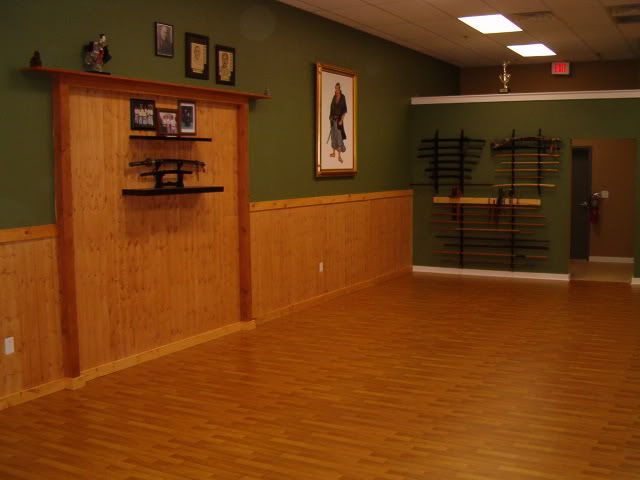
Traditional dojo environment

……when it’s a club.

I used to think that a dojo was simply the place where you did your training, whether that is a dedicated traditional dojo, a school gym, purpose built training centre or your own basement or garage. However, it seems that a dojo is much more than just the place you train.

In Michael Clarke’s book, ‘Shin Gi Tai’ ,he makes a definite distinction between a karate dojo and a karate club. He describes a club as a commercially based entity in which students pay fees and in return receive instruction in karate to a single set syllabus from which they can be awarded ascending ranks in the shape of coloured belts as they rise up the system. They can also participate in sport karate, enter competitions and collect trophies. A club may be affiliated to a higher organisation which may be the only place where a student’s black belt is recognized.

On the other hand Michael Clarke describes a dojo as a place where you learn budo.  He states that the main way in which a dojo is distinctive from a club has...

”little to do with the architecture of the place or the way people dress for training; the distinction has everything to do with the nature of the struggle going on inside each individual.”

Budo karate involves training body, mind and spirit. It is more than just learning to do karate techniques (however well you learn to do them). It is much more about learning to understand yourself.  In Michael Clarke’s words…”Without a spirited assault on your ego, the true value of karate will remain forever beyond your reach”. A “spirited assault” involves a lot of hard, physical training, self examination and reflection as well as personal reading and research.

Budo karate is individual karate, even if done in a group. Students, who will most likely have been handpicked by the Sensei based on their suitability for budo training, will not necessarily all follow the same training programme. Training will be tailored to their individual requirements and suitability (as determined by the Sensei, not the student). This is not possible with large classes of students so karate dojo typically have only a few students. 

Another main difference is that in a dojo the student is expected to take full responsibility for their own training. By that I mean they have the responsibility to turn up on time, observe the etiquette required of them, train hard, do their own research etc. The onus is on them to make progress. Any student not doing this will be asked to leave.  It would be rare for a ‘club’ student to be asked to leave for not trying hard enough or because they fail to make progress or show any understanding of what they are doing – providing they keep paying their fees.

By the criteria described above it is clear that I belong to a karate club not a dojo. Is that a problem? Is it still possible to practice budo karate in a club environment?

It would be wrong to automatically assume that all dojos are somehow superior to all clubs. There will be good and bad dojos and good and bad clubs and it will be better to be in a good club than a bad dojo. According to Michael Clarke even Okinawa has ‘bad’ dojos set up to exploit Westerners searching for the authentic karate experience.  Getting good advice about where to go is essential to avoid this pitfall if you’re planning a trip there.

A good instructor in a karate club will take an individual interest in your training and progress if you show yourself to be keen and hard working.  This will be subtle rather than overt: a willingness to chat with you after class, lending you a book or DVD, encouraging you to attend special seminars or classes, asking you for help with teaching or a grading session (this shows he/she trusts you). A positive and close relationship can develop between student and sensei in just the same way that it does in a traditional karate dojo – if you are a committed student.

I also think that it is possible to practice budo karate even if you are in a large commercial club – as long as you know what the practice of budo really entails and are prepared to tread this path alone. After all the practice of budo is an individual and lonely path by definition so it shouldn’t matter too much what environment you train in. Most good clubs will provide hard physical training and good instructors will drive you to do your best but it’s up to you whether you do so.

Every dojo will have good students (they would be asked to leave if they weren’t good) but clubs have to cope with good and not so good students (this is actually an advantage of clubs – they are inclusive and often see ‘poor’ students evolve and mature into ‘good’ students given enough time and encouragement).  I see no reason why a dedicated student in a club environment can’t achieve the same level of skill, understanding and knowledge about karate (and themselves) as a student fortunate enough to belong to one of the rare dojos dotted around the world.  The path may be less clear and contain more obstacles to circumnavigate and the student may have to look further and wider than their own club for guidance but for a dedicated student this is not an impossibility.

Club or dojo? How much does it really matter for the committed student of budo karate?


Bookmark and Share
Creative Commons License
This work is licensed under a Creative Commons Attribution-Noncommercial-Share Alike 2.0 UK: England & Wales License.
Tuesday, 30 October 2012

Some thoughts on stances...


Neko Ashi Dachi
(Cat stance)
I’ve been thinking a lot about stances recently. I like to see good stances: correct feet positioning, strong bend of the correct knee (or knees), correct weight distribution, good back posture, head held up looking forward etc. Good stances look strong and stable.


Beginners find stances difficult to master; they generally lean too much with their upper torso, don’t bend their knees enough, have their feet in a line, have incorrect weight distribution or look down at the floor. I’ve been there; it’s hard to get it right or for it to feel natural. It takes a long time and a lot of practice to get stances right and even longer to get the transitions from stance to stance smooth and quick.

A lot of people would argue that stances are for beginners or that they slow you down or are just too unnatural to be useful in real self-defence situations. I would beg to differ.

Stances are an essential part of achieving economy of movement when doing self-defence. Economy of movement is essential if you are to move swiftly around your opponent, getting yourself into advantageous positions to apply a technique, unbalance them or evade a strike. Good footwork is essential to achieving this; if you teeter around your opponent with lots of small steps, getting your legs crossed and generally wrong footing yourself you are likely to come a cropper.

Good use of stances helps you to:

…Shift your weight smoothly and quickly from one leg to the other as required.

…Maintain your own balance and stability by keeping your centre of gravity low but your posture upright.

…Unbalance your opponent either by directly using the stance to destabilise a balance point e.g. placing your knee directly behind theirs using a zenkutsu dachi (forward stance) or shiko dachi (sumo or horse stance) or more indirectly by using weight transference e.g. grabbing them and stepping back into a kokutsu dachi (back stance) or neko ashi dachi (cat stance).

…Quickly put yourself in the most advantageous and stable position to execute a restraint, takedown or throw.

…Move out of the way quickly and effortlessly if required.

Zenkutsu Dachi
(Forward stance)
Karate pays a lot of attention to stances. Most karateka will have spent many hours of their training going up and down the dojo in shiko dachi or neko ashi dashi with sensei picking up on the smallest postural transgression –“bend your knee more”, “stick your bottom in”, “turn your back foot in more”, “turn your back foot out more”, “put your weight back more”, “put your weight forward more”…….

It can all seem so picky sometimes and people will question the wisdom of needing to be so precise with your footwork and postures. After all, if you are attacked would it matter if you weren’t in the perfect cat stance?

Well, yes it would matter if cat stance was integral to the technique you were trying to execute on your assailant. If your technique depended on you suddenly shifting your weight backwards, pulling your opponent off balance whilst allowing your front foot to follow through quickly with a swift snap kick and then be able to spring forward off the back leg to land a punch; then being able to instantly get into a perfect cat stance may be crucial. Failure to achieve it may leave you unable to pull your opponent off balance and with too much weight on your front leg you won’t be able to kick effectively either and if your back leg is too straight you may not be able to spring forward for that punch – that could all lead to disaster!  

Stances are more than just good footwork, they involve the whole body. Good upright posture is crucial to a good stance. Without good posture you cannot engage the core muscles properly and without the core muscles engaged you cannot get any power in your strikes. Also, with poor, bent over posture you are liable to lose your own balance and be easily pulled over by your opponent.

Stances aren’t always an integral part of a technique; sometimes the situation may require you to be lighter and quicker on your feet. Evasion may be more important than getting a technique on your opponent. The art of tai sabaki (body movement) is an exercise in good stance work, except this time the stances are higher and lighter allowing quicker movements. Tai sabaki still involves attention to posture, feet positioning, weight transference and good transitioning so it is still stance work even if you don’t choose to call it that.

Shiko Dachi
(Horse or sumo stance)
I really feel that we neglect stance training at our peril. Without good stances our techniques will be weak and our movements clumsy. When you watch a senior black belt in action the thing that really stands out more than anything else is the way they move – it is precise and effortless. This is because of their use of stances; they always put their feet in exactly the right place with their weight distributed correctly and their posture upright and it all flows so smoothly and naturally.

So if your own or your student’s stances are poor and their movements clumsy get back to some formal stance training – up and down the dojo until their thighs ache; you’re actually doing them a big favour….


Bookmark and Share

Creative Commons License
This work is licensed under a Creative Commons Attribution-Noncommercial-Share Alike 2.0 UK: England & Wales License.

Friday, 19 October 2012

Do our training behaviours in the dojo reflect our behaviour in everyday life?


I read a blog article recently that suggested that the way we respond to our training partners in the dojo reflected the way we behaved towards others in our everyday lives. Here’s a quote from the article:

It’s interesting to train with people in the dojo – in time you can see the connection between their style of body movement (“taijutsu“) and their personal style of interacting with others outside the dojo. Those who engage with you as a training partner, giving you a realistic attack, going neither limp nor overly tense and rigid the instant that you start applying the technique, are often the ones that you will see actively engaging outside of the dojo as well, taking on responsibilities, not shying from making decisions and commitments. On the other hand, dojo training partners who try to thwart you by not letting you apply the technique correctly, jumping away unrealistically early, falling over when you didn’t do anything, flinching away when you haven’t done anything, quitting their own technique before it’s complete – these people are often the ones outside of the dojo who are afraid of commitment, flaky, indecisive, escapist, melodramatic or passive-aggressive.”

This is an interesting idea; let’s face it we’d all like to think of ourselves as the former person rather than the latter; though I suspect the degree of correlation between ‘dojo Joe’ and ‘everyday-life Joe’ is probably not as consistent as this author suggests. Or is it?

We like to argue about whether martial arts training reveals character or develops it. The idea purported above suggests that character is revealed in the dojo rather than developed: the person who can’t commit to things in everyday life won’t commit to a technique in the dojo (e.g. won’t attack properly or won’t commit to being thrown); the person who is indecisive in life will also be indecisive in the dojo (e.g. hesitates to choose an appropriate technique) whereas the person who in life is confident and self-disciplined will bring those same qualities to the dojo (e.g. will work hard, focus well and defend and attack with confidence).

Is it that straight forward? Is it possible that some people may be very confident, successful and committed in their everyday lives but be a little fearful and reticent in the dojo – afraid of hurting themselves or others? Or, be rather timid and under-achieving in their private lives but come alive in the dojo because they are comfortable with the people they mix with there?

If it’s true that people bring the same characteristics to the dojo that they display in everyday life then is it possible that those characteristics can be changed/developed in the dojo and then transferred back to everyday life?

I have more questions than answers here but my own personal viewpoint is that to a great extent people do display similar characteristics inside the dojo as they do outside. I know that I am pretty much the same person inside the dojo as outside and I don’t feel my fundamental character has changed much over the last 5 years that I have been doing martial arts.

What do you think? Does the way we train in the dojo reflect the way we behave outside in our everyday lives?


Bookmark and Share

Creative Commons License
This work is licensed under a Creative Commons Attribution-Noncommercial-Share Alike 2.0 UK: England & Wales License.
LinkWithin

Related Posts with Thumbnails